by Clair Mooney | 26 Sep, 2025 | Main News Feed, Skills, Sustainability
FIS is supporting The Future Skyline Skills Commitment to encourage built environment employers to offer more inclusive workplaces and training, especially green skills training, to attract and retain new talent, including young people aged 16-18.
The construction industry is about people, progress, and possibility. This commitment, developed by the City of London Corporation and the Skills for a Sustainable Skyline (FSSC) Taskforce, empowers us to shape a
sector that is sustainable, inclusive and future-ready.
Iain McIlwee FIS CEO and Skills for a Sustainable Skyline Strategy Board Member said:
The Skills Shortage is a systemic problem that is impacting the market now and has the potential to choke expected future construction. The City of London Corporation recognise that this in turn has the potential to impact the attractiveness of London as leading global business hub.
The scale of the problem is enormous and particularly acute in London that was more reliant on migrant workers than other parts of the UK. The supply chain, from supplier and contractor through to client, needs to work together to create the right conditions to invest and work collectively to ensure we are finding the next cohort of workers now, have a stable pipeline of people wanting to join the industry in the future and the training infrastructure to deliver this. It has been amazing to work on the Skills for a Sustainable Taskforce Leadership Taskforce, I have learned loads, made amazing connections and found new hope. I applaud the City of London Corporation for creating this Taskforce and the collaborative ecosystem that is now working to support our common goal of fixing the skills crisis in London and look forward to being part of the next stage of the work – delivering it!”
To launch the Future Skyline Skills Commitment, The Skyline Skills Hub is hosting an in-person launch reception on the evening of Wednesday 1 October from 18.30-19.15pm (with networking before and afterwards), hosted at NLA’s The London Centre (3 Aldermanbury, London EC2V 7HH. Iain McIlwee will be attending the launch event, and is encouraging members to join him and hear about the commitment and how it can drive change in the sector, promoting sustainability and inclusivity by inspiring companies to take practical actions to address the sector’s skills gap.

by Oscar Venus | 19 Sep, 2025 | Skills
The Skills Centre is launching it’s new training centre in Essex on Friday 10 October.
This new training hub is all about helping people across the region kickstart their careers in the finishes and interiors sector. With a focus on Interior Systems and Dry Lining, it’s set to be a key spot for skill development in Essex’s construction world.
What’s Happening on the Day:
- Take a tour of our brand-new facilities and see live training in action
- Hear from learners who are already on their way to a great career with us
- Meet the team and our partners who are driving skills and jobs across Essex
- Enjoy some light refreshments and network with other guests and industry leaders
Who Should Come?
This event is perfect for:
- Employers and contractors in the finishes and interiors sector
- Local authorities, councillors, and GLA reps
- Skills and education providers
- Community leaders, referral partners, and industry contacts
- Policy-makers, funders, and anyone interested in the sector
If you would like to come along, please register using this link Launch of The Skills Centre Essex Tickets, Fri, Oct 10, 2025 at 12:30 PM | Eventbrite
For more information please contact Beena Nana or Marie Flinter

by Oscar Venus | 19 Sep, 2025 | Skills
CITB has commissioned BMG research to carry out its workforce mobility and skills research throughout the construction industry in the UK.
The research is undertaken every 2 to 3 years and aims to gather information from around 3,500 manual or semi-skilled construction workers at sites around the UK to update CITB on how far site-workers travel to work and the training and qualifications they hold.
CITB want to use this work to improve their understanding of occupational and geographic movement across the industry.
Workers are asked to provide information about their employment history, skills, training and qualifications achieved, interest in changing trade/occupation (and whether training would be required), miles travelled to work daily, and distance from main/permanent home if living away for work. All responses remain anonymous and are not shared with their employer.
There is a survey link available which can be shared with individuals to enable them to participate in their own time and at their own pace.
To access the link they just need to type: CITBsurvey.co.uk into their internet browser, on their smart phone, tablet or laptop
BMG Research always observes the Market Research Society Code of Conduct. You can find out more information about our surveys and what we do with the information we collect in our Privacy Notice which is available here: https://www.bmgresearch.co.uk/privacy
If you have any queries about this research or would like some more information, please contact the team at BMG at citb@bmgresearch.com or call on 0121 333 6006
by Oscar Venus | 4 Sep, 2025 | Drylining, Skills
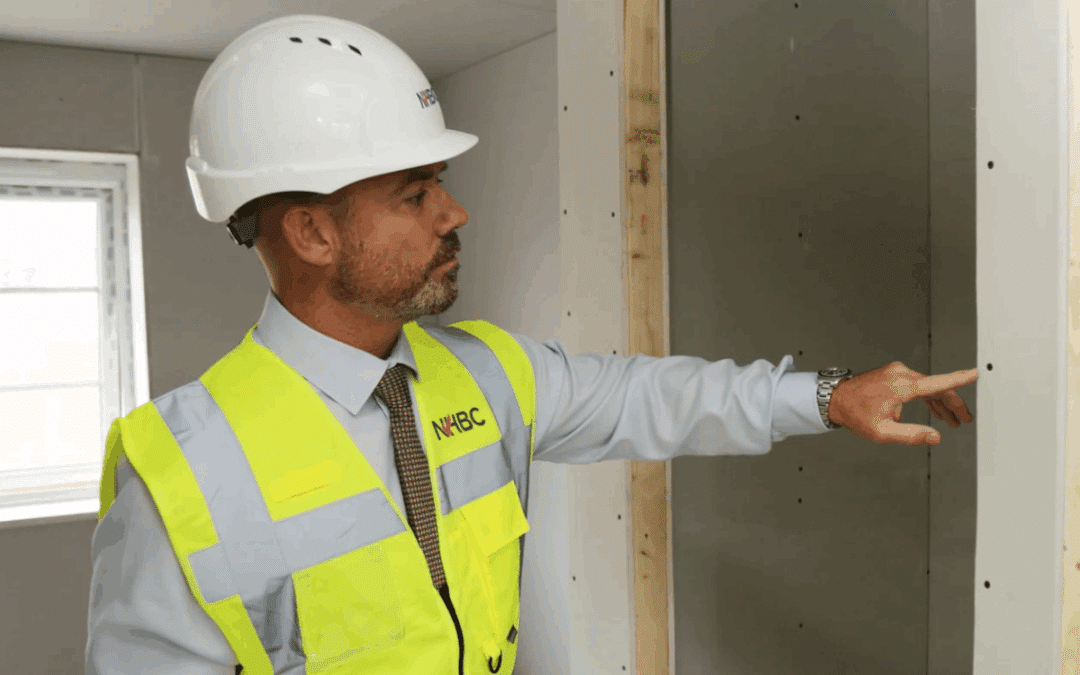
FIS and its members have collaborated with the National House Building Council (NHBC) and HBF to launch a new series of drylining masterclasses aimed at improving skills, quality, and compliance within the construction industry.
These Dry Lining Masterclasses are designed to deliver practical skills and knowledge on the most common dry lining issues found by our inspection teams.
Developed to support both new entrants and experienced professionals, these practical training sessions will be delivered at NHBC’s network of training hubs. The programme is designed to raise standards across the drylining trade, a critical element of modern building interiors that often lacks structured training opportunities.
The Dry Lining Masterclass content has been tailored to cover the following key areas:
- defect statistics
- when dry lining and plasterboard can start
- plasterboard fixings
- dry lining
- fire safety
- sound insulation
- consistent approach to finishes.
This joint initiative supports wider efforts to address the growing skills shortage in the construction sector and reflects a shared commitment to driving up standards across UK housing and commercial developments.
By enhancing knowledge and practical capability in drylining, the training aims to improve quality, boost productivity, and help build a more competent workforce.
To access/book onto the courses or to find out more click on the following links
Dry Lining Masterclass – NHBC
Dry Lining Masterclass open course – NHBC

by Oscar Venus | 29 Aug, 2025 | Skills
FIS has submitted a formal response to Ofqual’s consultation on proposed reforms to apprenticeship end-point assessment (EPA), raising concerns over the potential risks to assessment quality, consistency, and the readiness of the sector to adapt.
The consultation, which closed on 27 August 2025, outlines a new regulatory framework intended to modernise apprenticeship assessment by moving away from the traditional EPA model. The proposed system places greater emphasis on flexibility, streamlined assessment plans, and increased involvement from employers and training providers.
Earlier in the year, DfE brought in several apprenticeship reforms. The reforms were meant to “slash red tape” and introduce shorter and more flexible apprenticeships. Most reforms are understandable, but the reforms to the assessment process is causing industry-wide concerns.
A set of 5 pilots were run by Skills England with the intention of proposing assessment reforms and taking on feedback. Occupations from healthcare, IT, construction and others were selected, with Site Carpentry & Joinery installers identified for construction. Whilst this sector group is part of the pilot, these changes will impact all of the trades and installer occupations and will likely impact other occupations across the country.
While the key issues are outlined below, the way the pilots have been conducted, a poor consultation process, and the potential negative impact on apprenticeships, raises serious concerns.
Key impacts:
- An impact on the Construction Skills Mission Board to deliver against all priorities
- Apprenticeships will not meet the competence requirements set out in the Building Safety Act 22 which may result in a very real reduction of competent people in our industry.
- The construction sector will be increasingly unable to deliver essential skills through apprenticeships. Industry will likely remove apprenticeships from existing frameworks altogether, including potential calls to decouple CSCS cards from apprenticeship pathways. Without immediate intervention, apprenticeship uptake for construction is at serious risk of collapsing entirely
The perceived issues:
- Assessment bodies are likely to be Awarding Organisations (AO’s) or training providers:
- Assessment organisations will be able to create the assessment based on their own thinking.
- The level of detail in the assessments is now going to be set by the assessment organisations.
- If there are multiple assessment organisations, this will create varying levels of assessment, based on the organisation.
- We believe this will reduce the level of competence validation of those going through the assessment.
- Under the reforms, the New Assessment Plans have a different purpose to the current End Point Assessment Plan. The new proposed assessment plan will:
- Digital assessments will be prioritised. With a practical trade like Installers, where they physically have to demonstrate competence (stairs, fire door install), digital assessments will not work.
With regards to the pilot consultation sessions:
- Invites to the pilot meeting were issued 2 days before the meeting, with non-attendance resulting in feedback not being taken on board
- Information for the meeting being issued less than 24 hours before the meeting, with no time to review and comment
We understand that Skills England have been asked to implement these principles within the boundaries of the apprenticeship reforms.
If you have any feedback or queries, please contact beenanana@thefis.org
by Oscar Venus | 22 Aug, 2025 | Skills
CITB has announced a number of changes aimed at “streamlining our approach to more effectively help levy-registered employers access financial support for training. To do this we have reviewed our existing offer and we are making changes. These changes are not removing the support offered by CITB to industry but are simplifying the way in which they are accessed, making it easier for employers.”
In a set of changes (listed below) FIS has highlighted concern that, the Skills and Training Fund will close from 30 September 2025 with Employer Networks becoming the sole route for business development funding. This shift is intended to reduce confusion caused by overlapping schemes and improve efficiency. The ‘Suggest a Course’ initiative will also be closed, as CITB believes Employer Networks now provide sufficient support to industry. Additionally, the Industry Accreditation grant uplift will end on 31 December 2025, earlier than planned, and a new £240 grant tier will be introduced for shorter ‘Award’ level qualifications from September 2025. These changes are being positioned as part of a broader effort to make better use of industry funds and focus on impact.
However, FIS is concerned that particularly the almost immediate withdrawal of the Skills and Training Fund removes a valuable funding route that many of members have been using successfully and has been delivering clear benefits. Commenting on the revisions, FIS’s, Beena Nana stated:
“For a membership that largely voted against the most recent levy order, primarily due to concerns around the structure of the levy and how the makeup of our workforce affects both what members contribute and what they are able to claim, this will feel like a real kick in the teeth. We acknowledge the need to change and simplify the need to claim, but the decision to cut the Skills and Training Fund and giving businesses just over a month’s notice is short-sighted and only reinforces concerns that CITB is out of touch with the employers it is meant to support. Changes should be phased in and tested and considered in the context of the different businesses and business types that CITB is trying to serve, allowing businesses to budget and manage change. From where we are sat the withdrawal will almost certainly reduce the short-term return members receive on their levy contributions. While Employer Networks may be working for some employers, our experience and feedback so far has been mixed. More needs to be done to evaluate their effectiveness and improve how they operate. Our message to CITB is fairly straightforward, simplification is needed, but don’t remove the simplest bits to use first!”
Full list of the changes are:
Skills and Training fund
Currently, both Employer Networks (ENs) and the Skills & Training (S&T) fund offer funding for similar types of training, which we know can be confusing for employers navigating their options.
Listening to employer feedback, we are going to simplify this process and create a more efficient service, we’re moving towards a single route. From 30 September 2025, the Skills & Training fund will close, and Employer Networks will become the single channel for further developing businesses. Alongside this the grants scheme will continue to operate to support core construction training.
To ensure the most appropriate use of industry funds, applications received in September will operate under new payment terms where funding will be paid upon completion of the agreement. If you have an application that has already been agreed, this will of course be honoured.
Industry Accreditation uplift
We put this grant uplift in place when CLC announced the removal of the Industry Accreditation card. This was to support individuals that needed to complete qualifications to remain carded. To date we have supported over 11.5k individuals which exceeds the number expected. We had intended to keep this uplift in place until the end of March 2026 but to ensure most suitable use of industry funds, this uplift will be removed at the end of December 2025. Once the uplift is removed, grants to support these qualifications will return to £600.
‘Suggest a course’ initiative
Introduced to ensure we could get feedback from industry on what was needed, we will now be closing this initiative. ENs were established to make it easier for employers to access training, and funding and bring together employers at a local level to inform CITB on training needs. As ENs are well established, we do not need to duplicate these routes so closing the initiative is another way we are streamlining our offer to industry.
New short qualification grant tier
As announced recently, from September 2025 we will be introducing a new grant tier for some short period qualifications to ensure that CITB funding is effectively optimising impact.
For achievements from September 2025, any qualification achieved at an ‘Award’ level will receive the grant value of £240 (rather than £600).
Award’ level qualifications typically have a shorter duration with fewer modules to complete, and the cost to undertake this level is usually lower, therefore this is reflected in the new grant payment.Launch of online grant portal
We’re delighted to let you know we will shortly be introducing CITB’s new online services platform, launching on Wednesday 24 September.
This is the first phase of a modernised system designed to make accessing CITB’s Grant Scheme simpler and more efficient. With the new platform, employers will be able to:
- Apply for Apprenticeship and Qualification grants online
- Track the status of grant applications
- Have greater control over online access to their account.
If you have any questions or concerns, please contact beenanana@thefis.org or marieflinter@thefis.org