
FIS is inviting members to review and comment on our draft response to the Building Safety Regulator’s latest consultation on Category A and Category B works, ahead of a final submission at the end of May.
The consultation focuses on improving proportionality within the Higher-Risk Building (HRB) regime by reclassifying certain works and expanding the potential role of Competent Person Schemes (CPS). While the proposed reforms aim to reduce unnecessary bureaucracy and speed up delivery, they also signal a significant shift in how compliance is managed.
The details of the consultation were presented at a workshop on 18th May. The suggestion is to reclassify most in-flat works as Category B, this would mean many small projects inside flates, such as work on internal (non load bearing) partitions or fire door replacements are currently captured within Category A, creating a seemingly disproportionate levels of documentation and delay. The consultation also seeks to recategorise smaller works in communal areas in a similar way.
A number of critical issues were discussed that will form the core of the FIS response.
Mixed-use buildings – a key gap
One of the strongest themes from the meeting was the lack of consideration for mixed-use buildings.
The consultation currently focuses on residential units, but it was emphasised in the discussion that similar compartmented environments exist in other categories of space – including offices, retail spaces, and other commercial units. In these cases, comparable works could face very different regulatory treatment despite carrying similar levels of risk.
FIS is therefore questioning whether the current approach reflects modern building design and delivery, and is calling for greater consistency in how different unit types are treated. The response also highlights the need for clearer guidance to avoid confusion, particularly in projects where multiple uses sit within the same building.
Competence vs Capability – getting the balance right
Another key issue raised during the workshop was the shift towards competence-based regulation.
While members recognise the benefits of reducing reliance on prescriptive documentation, there is concern that current proposals place too much emphasis on individual competence, particularly through the expansion of self-certification schemes.
The FIS response stresses that successful delivery depends not only on skilled individuals, but also on organisational capability – including supervision, coordination, quality systems, and ongoing assurance. Existing certification schemes such as FIRAS and IFC were cited as providing this broader assurance, and members were clear that reforms should build on these frameworks rather than introducing new, overlapping accreditation requirements.
Guidance, clarity and practicality
Concerns about the practical implementation of the proposals, particularly around defining “small-scale” works using thresholds such as time and workforce. There was a strong view that these measures do not always align with real risk and could introduce further ambiguity.
As a result, FIS is calling for:
- Clearer, consolidated guidance
- Better alignment with real-world project delivery
- More practical examples to support consistent decision-making
Without this, there is a risk that the industry continues to default to Category A as a precaution, undermining the intended benefits of reform.
Have your say
FIS is now asking members to review the draft response and contribute any additional comments or examples from their own experience.
Deadline for comments: 26 May
Final submission: 28 May
This consultation represents a critical opportunity to shape how building safety regulation evolves, particularly for fit-out, refurbishment, and interiors work.
As Iain McIlwee commented during the session:
“This is about getting the balance right – reducing unnecessary burden without losing control of safety. But we need to make sure the system reflects how buildings are actually delivered.”
Members are encouraged to share feedback. Details of the meeting and the draft response are available below.
Other significant consultations that FIS is currently working on related to the Building Safety Act include

See more news likes this

Sites become smart
CSCS and Build UK have published a six-page guidance document on ‘How to be a Smart Site’ to help realise the benefits of using Smart Technology to check cards carrying the CSCS logo. It covers how to check cards that are already using Smart Technology, how to...

Road haulier: HGV driver shortage
The Department for Transport and Cabinet Office are seeking input for an urgent review of the HGV driver shortage. DfT and Cabinet Office are asking all operators who employ HGV drivers to complete the following DfT haulier survey...
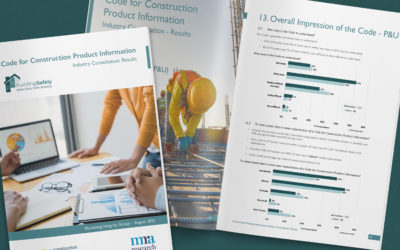
CPA publishes results of industry Consultation on new Code
The Construction Products Association (CPA) has released the results of its industry-wide consultation on the new Code for Construction Product Information (CCPI). The 65 page report – downloadable at www.buildingsafely.co.uk – details feedback from 35 trade...